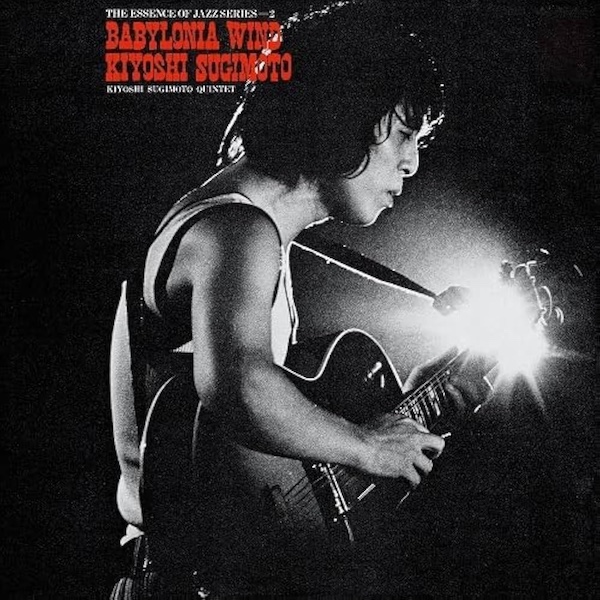
kiyoshi sugimoto's babylonia wind album cover

Kiyoshi Sugimoto: Babylonia Wind (1972)

Would you look at that? Japanese jazz that’s NOT on Three Blind Mice or East West Records. Earlier this year saw the vinyl release of Babylonia Wind, the 1972 record from guitarist Kiyoshi Sugimoto and his quintet. Beautifully packaged as part of the Deep Jazz Reality series from Universounds, the Tokyo record shop and reissue label run by Yusuke Ogawa, it’s another hidden gem in the early 70s jazz rock revolution. I don’t know if I’m equipped to compare how this fares with a lot of what was on the rise at the time: this isn’t Miles Davis levels of fusion and jazz rock, but Sugimoto’s guitar is definitely wailing with a rock god fervor over the course of the album’s five tracks.

Continue reading “Kiyoshi Sugimoto: Babylonia Wind (1972)”
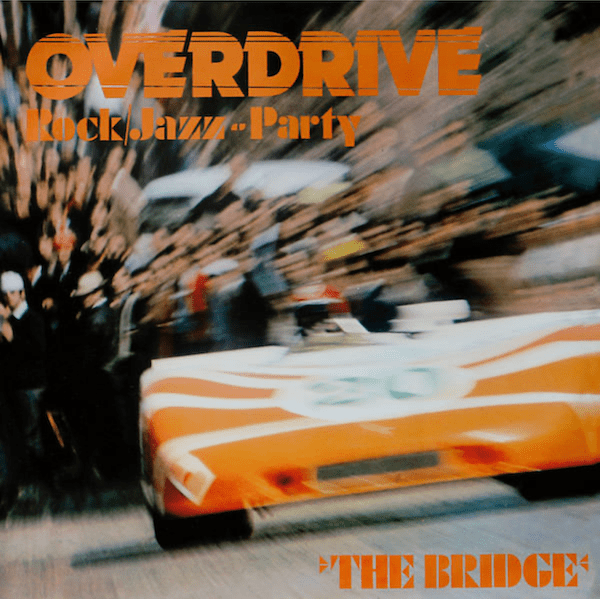
the bridge - overdrive jazz rock party

The Bridge: Overdrive – Jazz/Rock Party (1972)

Sometimes an album just speaks to you. It’s a combination of everything: the cover, the production, the “vibe” if you will. One component might pull you in; the rest tether you for eternity. Such was the case when I first laid eyes on The Bridge, a one-off project from Kristian Schultze, the keyboard/organ whiz who would later go on to join Passport and then with Michael Holm go on to form the new age band Cusco. None of that is important to know, though: just take a look at that cover and that album title. The whole project screams jazz funk rock grooves for a party, and indeed, Overdrive – Jazz/Rock Party is exactly as advertised. Not a lot going on thematically, just some good time funky jams that make your day a little more fun, and just a little brighter.

Continue reading “The Bridge: Overdrive – Jazz/Rock Party (1972)”
fields - feeling free

Fields: Feeling Free (The Complete Recordings 1971-1973)

Another shiny object found in the detritus of the 70s: Fields, a trio led by keyboardist Graham Field that rolled deep in the waters of symphonic, progressive, and psychedelic rock. I was only made aware of them a month ago, and I don’t think I’m alone; how else to explain the existence of Feeling Free (The Complete Recordings 1971-1973) which – accurate to its title – collects the band’s entire brief output over two discs? There’s an interesting, “What if early ELP with pop hooks?” vibe to the music that works well, and while there’s nothing earth shattering to be found, it’s a solid compilation I’m glad to fold into my current rotation of classic prog and rock.

Continue reading “Fields: Feeling Free (The Complete Recordings 1971-1973)”
orange peel - orange peel

Orange Peel: Orange Peel (1972)

Gotta love the dusty corner where you come across those “one and done” bands. Especially in Germany, where the krautrock reaction to the rise of the American and UK rock scenes spawned any number of bands reaching to find a musical expression that embraced the rise of that country’s youth. Orange Peel may have taken a safer path with their self-titled album – this is very much indebted to the aforementioned scenes – but when it’s done this well, who really cares? I guess the listeners did, which is why despite opening for Deep Purple and getting packaged with other great (but tiny) German psych/rock acts, Orange Peel the album became another casualty of the “one and done” phenomenon. Too bad, because I really like the vibes on this one.

Continue reading “Orange Peel: Orange Peel (1972)”
miles davis - agharta

Miles Davis: Agharta (1975)

Where does a listener start when it comes to the “electric period” of Miles Davis? Where does the “electric period” even begin? Miles and the second quintet were using electric instruments as far back as Miles In The Sky (a personal favorite) but it seems like most folks peg it at the ambient, rolling atmosphere of In A Silent Way (another favorite). Where listeners start, though, is another matter. For me it was unfortunately with Pangaea, a live set from Japan that at age 17 I was not prepared for. Had I only started with that same date’s afternoon set, the brilliantly funky Agharta, I might have more quickly embraced this side of Davis’s career instead of retreating back to the early 60s for much of my 20s and 30s.

Continue reading “Miles Davis: Agharta (1975)”
mahogany rush - child of the novelty

Mahogany Rush: Child Of The Novelty (1974)

Out of the thousands (probably millions) of guitarists influenced by Jimi Hendrix, it’s a rare player that actually embodies Hendrix’s particular slippery vibe. Stevie Ray Vaughn was definitely one of them, and for my money Uli Jon Roth hits the same psychedelic fire highs. Frank Marino is another, and his early work with Mahogany Rush shows off just how indebted this muscular trio out of Canada was to that classic sound. I was unfamiliar with Marino and the band, but Child Of The Novelty hooked me at my local used shop with that killer cover art, so I took a chance on it. Slinky and funky, this is a killer early hard rock album that’s going to sit comfortably in my collection when I want to groove out to something like but not quite Hendrix.

Continue reading “Mahogany Rush: Child Of The Novelty (1974)”