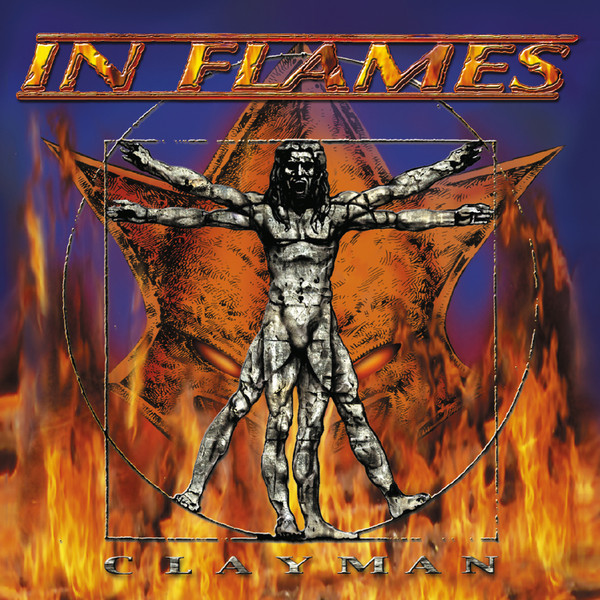
I needed something that rocked. Riffs that cut, melodies wrapping you in drama leading to anthemic choruses and killer solos. Normally I’d go with some tried and true 80s thrash, but ever since really falling for their 2023 album Foregone In Flames has entered into the riff rotation. Clayman sits squarely in the overlapping boundaries of the Swedish institution’s two distinct phases: on the one hand are the pocket of albums that helped define the New Wave of Swedish Death Metal sound; on the other is the more processed, streamlined metal the band would continue to refine and tweak for the next quarter of a century. As such, it gets the best of both worlds, and has been a favorite of mine since discovering its sound back in my college days.
Admittedly, the band’s discography isn’t perfect; I think I’m in the minority in that there are albums I like and don’t like on both sides of that divide. I can take or leave early arguable classics like Colony and Whoracle, greatly preferring later albums like Come Clarity and A Sense of Purpose. But Clayman stands apart, having a clarity and concision that cuts to the bone. It starts with “Bullet Ride”, which maybe has one of the best variations of a riff that everyone from Dokken to Triumph have used. Vocally Anders Fridén hasn’t lost his particular barking rasp, and his “clean” singing is more of a brief punctuation than the center of the song, something that would change in a big way on follow-up Reroute to Remain.
From there it’s pretty much an onslaught of the same kind of tune: ripping guitar and charging melodies under this sheen of filters and process that largely defined the band’s sound in this period. If you’re looking for variation between tracks like “Pinball Map”, “…As The Future Repeats Today” and the more upbeat “Swim” you’ll need to listen hard – there’s a reason this sound has become so identified not only with In Flames but the burgeoning scene at the time. And if I have a complaint, it’s that sense of a wash of sound throughout Clayman: everything is compressed and sounds like it’s focused right at the middle of your head. Great for mono recordings, less so for a modern metal album. But as “Another Day In Quicksand” ends the album I can’t help but enjoy the rush the album gives me. Guitarists Jesper Strömblad and Björn Gelotte do the harmonized lead thing as good as Thin Lizzy ever did, and the inventiveness of some of the riffs and rhythms are inspired, despite the clinical polish producer Fredrick Nordström puts over everything.
I get that sound helped launch an entire genre, but I still wish it was a little more live and in your face. It would be years before In Flames found a good balance between their aggression and melodic sensibilities again (some would say they never found it again; they’re wrong) but Clayman continues to stay fresh enough to come back to again and again.




 Consuming the Tangible
Leave a comment