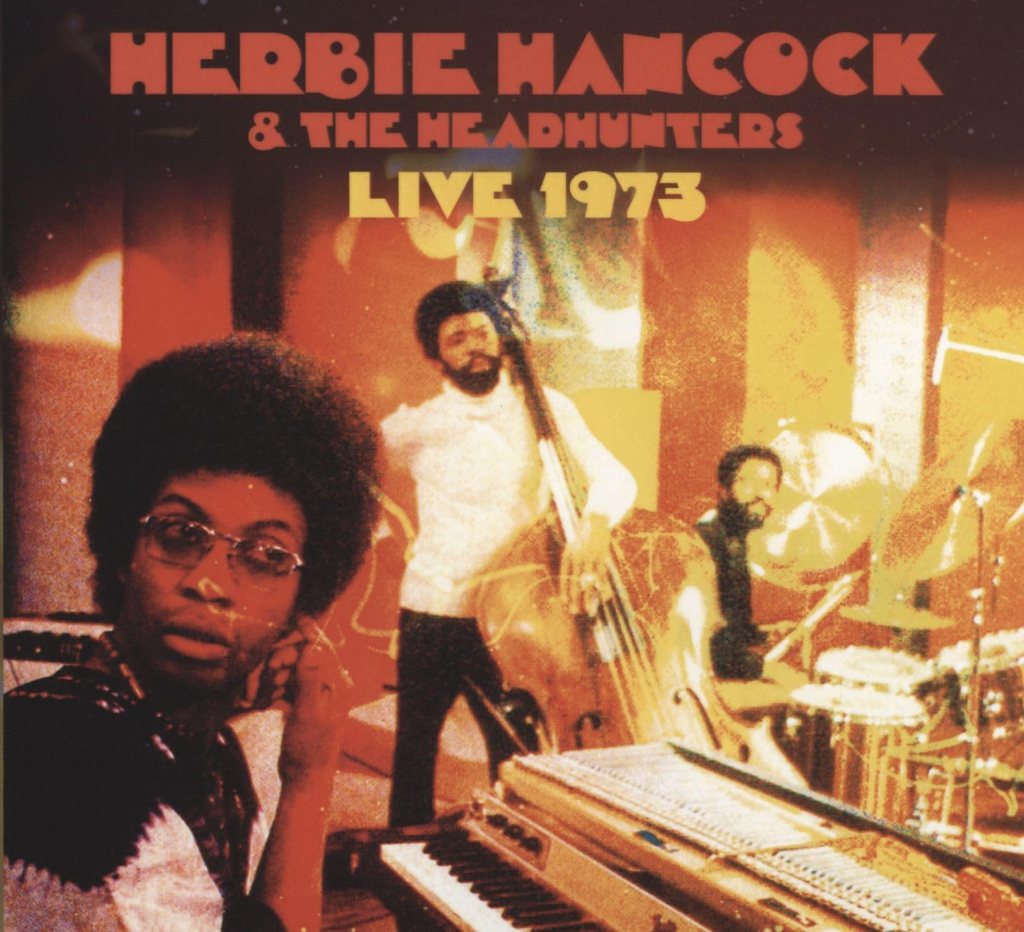
It’s an inevitability. The deeper you dive into the music of the ’70s, you eventually have to contend with the “live” question. As in what to do about the incredible breadth of both authorized and bootleg recordings available. Genre seems almost irrelevant: rock, prog, jazz, fusion…you start to realize how vital the live setting was for bands to stretch, improvise, and build the musical shapes into ideas that would germinate into future classics. After dipping my toe into the bootleg waters with established bands and recordings (Floyd, Zeppelin, and – of course – the Dead) I started branching further into the jazz scene, scoring a pair of great shows from Herbie Hancock & the Headhunters fresh off the release of Hancock’s now classic Head Hunters (two words). Live 1973 finds the combo in great form, light and flexible, laying down some serious grooves at the Fairfield Theater in East Lansing, MI for National Public Radio.
Hancock is one of those genius musicians I spent too long focusing on as a partner and sideman to Miles Davis rather than how he maneuvered as a bandleader. And even that realization didn’t come until my late teens: —before that he was simply the cool guy who made the Rockit video (I was maybe 10 years old, remember). It’s really only been in the past decade where, beginning with Maiden Voyage and Head Hunters, I started to build the idea of Hancock as a leader in my head. Hearing him and the band stretch out on these five cuts, three of which hail from Head Hunters, is a sonic head trip. After a quick band introduction from the MC, the group launches into a 16-minute jam of “Sly” that takes the homage to the soul/funk peer and explores the upper reaches of the atmosphere.
From there it moves into “Watermelon Man” with its signature opening. It’s a tight performance, efficient and lean, and a great prelude to one of my favorite moments on the album: the thumping band intro into the next massive workout, “Shiftless Shuffle.” Paul Jackson’s bass might be the sexiest bass sound I’ve heard so far this year, and the way drummer Mike Clark slides in next is a joy, putting me right in with the lively crowd. The last piece of the puzzle is reed man Bernie Maupin who really blazes across the entirety of the track.
Things get more plugged in for “Chameleon,” letting Jackson’s electric bass mix with Hancock’s keyboards for some serious funky rhythms. And in a perfect closer and prime example of why understanding the context and times of a performance is critical, the largest applause of the night comes with the opening bars of “The Spook Who Sat By The Door.” Yes, it’s another great funky electric number in the vein of “Chameleon,” but it’s also the titular theme to the film adaptation of Sam Greenlee’s hit novel, released just the month before. This was news to me, and now I can add that soundtrack and Hancock’s name on the wall next to Isaac Hayes, Curtis Mayfield, James Brown, Marvin Gaye, Jimmy Cliff…I’m probably forgetting a ton, but just the sheer amount of remarkable music folks were making for films at the time is staggering.
Anyway, Live 1973 is a really great snapshot of a group that I want to dig into, which is why tomorrow we’ll look at the same band a year later on another bootleg.




 Consuming the Tangible
Leave a comment