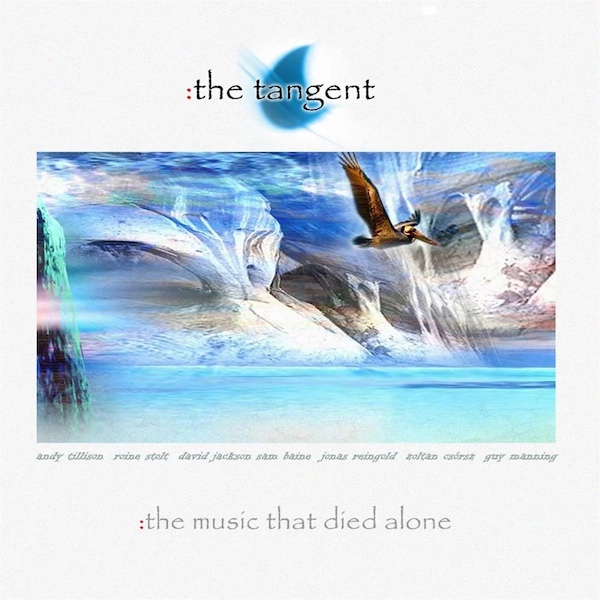
I always considered myself a prog rock fan, but that label had a very limited scope in my self definition. Yes, King Crimson, Pink Floyd, and especially Jethro Tull (Genesis came much later) all informed my perception of what progressive rock was, and what time period it was dominant in. It’s only been the past year or so that I really started digging both into the deeper pockets and sub-genres of the form but also where it was going in the present. Out of that exploration came three big (maybe the biggest when it comes to modern prog?) hitters that have not only broadened my scope of what prog is but have quickly become favorite bands for me. We’ll hit the discographies of Transatlantic and The Flower Kings later, but I wanted to devote the next series of posts to the wonder that is Andy Tillison and The Tangent, starting with their 2003 debut The Music That Died Alone.
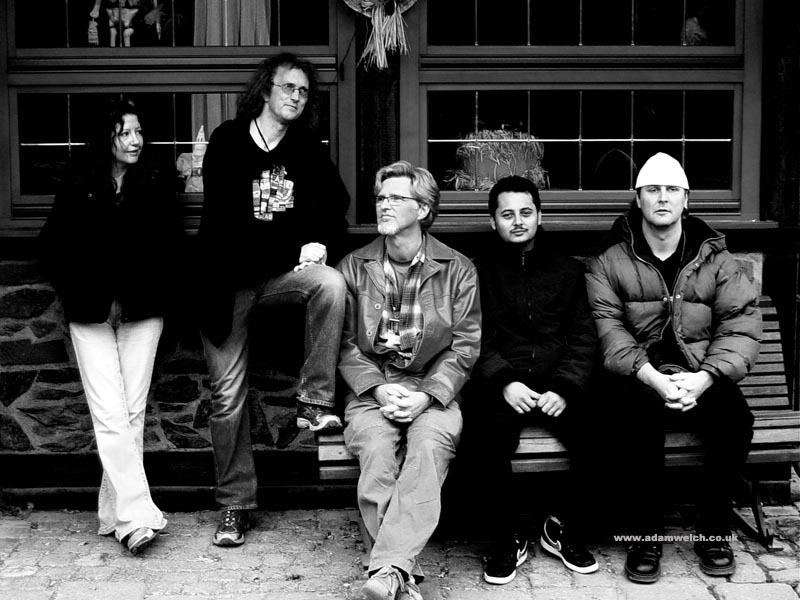
The brainchild of Parallel or 90 Degrees leader and multi-instrumentalist Andy Tillison, The Tangent plays modern, driving progressive rock that veers away from the more fantastical topographic subject matter of other bands. originally also featuring in a quasi-supergroup capacity Roine Stolt from The Flower Kings (there is a LOT of cross-pollination in modern prog) as well as bass legend Jonas Reingold (The Flower Kings, Steve Hackett, dozens of other acts), who continues with the band to this day. The Music That Died Alone, originally conceived as Tillison’s solo debut is a pretty great introduction to the band as a whole: three large suites broken up into chapters with a dazzling array of solos and fun instrumental breaks, buoyed by the capable vocals of both Stolt and Tillison. And at only 48 minutes it’s a simpler album to digest as opposed to the later, more expansive two-hour plus extravaganzas both bands have indulged in.
It starts with the eight-part In Darkest Dreams, which kicks off with “Prelude – Time For You.” The instrumental not only covers various themes that will present themselves throughout the album, but has a stellar Roine Stolt guitar solo and some great keyboard work from Tillison. Also of note straight away is the drumming of Zoltan Csórsz – the production is fantastic, giving his drums plenty of space and air to resonate in. This brief introduction exemplifies everything I’ve come to love about prog rock. It seamlessly segues into the first full song, “Night Terrors” which carries the melodic theme forward, Reingold’s bass popping in the background. Hearing Raine Stolt sing is a great surprise, very different from how he sings in both his primary band and Transatlantic (I told you there was a lot of cross-pollination here). The chorus is a huge ear worm, “This sleep is not what it seems!” framed with great keys and horns. David Jackson provides a ton of color with his sax and flute on the track. There’s definitely a pop element at play here; heavy moments never venture so far as to be construed as “metal” – Dream Theater this is not, although the music can often be as complex.
“The Midnight Watershed” instantly takes over from the ending keyboard piece of “Night Terrors” and it’s a great instrumental, allowing for everyone to show off their chops, including Sam Baine on piano and Reingold who is simply a beast all over this piece. He continues his subsonic reign of terror on the gentle “In Dark Dreams” which features Tillison singing. Lyrically the album never veers into fantasy territory – “No Hobbits or Orcs in our songs” is listed on the band’s website – and “In Dark Dreams” in particular is personally affecting for me, as Tillison talks about also being there on the precipice and feeling hopeless. “The Half-Light Watershed” is all Guy Manning, a brief acoustic guitar and synth passage that acts as a bridge to him taking lead on “On Returning.” It’s another brief musical passage, one that features David jackson’s sax to bleed into his spotlight, “A Sax in the Dark.” The three pieces make up their own mini-suite within In Darkest Dreams before finally ending the first section of the album with “Night Terrors Reprise.”
The three parts that make up The Canterbury Sequence is one of the most famous in the band’s catalog, and a live staple to boot. It starts with the infectious “Cantermemorabilia,” Tillison leading the way for an homage to the specific UK prog scene with prominent flute excursions from Jackson. As if to emphasize the homage the next track is a cover: “Chaos at the Greasy Spoon” is taken from the great Hatfield and the North’s second album, 1975’s The Rotter’s Club. Solos abound, and the flute helps to capture that specific vibe bands like Hatfield and the North, Egg, and Caravan shot for in their own music. The suite ends with “Captain Manning’s Mandolin,” another brief musical passage that stands on its own with needing to fold into a larger concept.
At seven minutes maybe “Up-Hill From Here” constitutes its own suite? It’s tagged as its own section on the album, and it gets to the driving rock in a way that might make it the most accessible, mainstream song on the album. Horn punctuations, big, big drums, and more hooky choruses align to the kind songs the band would nail later on in their career. Finally, the album ends with the four-part The Music That Died Alone. “A Serenade” is simply that: a small, pretty piano piece played by Tillison that opens the door for “Playing On…” It’s a darker, more somber song with glimpses of light. As the last real vocal piece it has a lot to say about the state of the world, and this weird, deep music that all too often dies alone. The “music” in this instance is (maybe obviously) more than just the genre the band records in, it’s the rhythm of our lives, and even in the song’s bouncier moments betrays a cynicism in the lyrics. But I think it’s ultimately hopeful; we get to spend a few beautiful minutes in the instrumental “Pre-History” before a final “Reprise” takes us out.
The collaboration between Tillison and Stolt would only last one more album before Stolt would focus on his own endeavors, but as a start to a new band and as an album on its own merits The Music That Died Alone is a fantastic example of what progressive rock is capable of, decades removed from its origins.


 Consuming the Tangible
Leave a comment