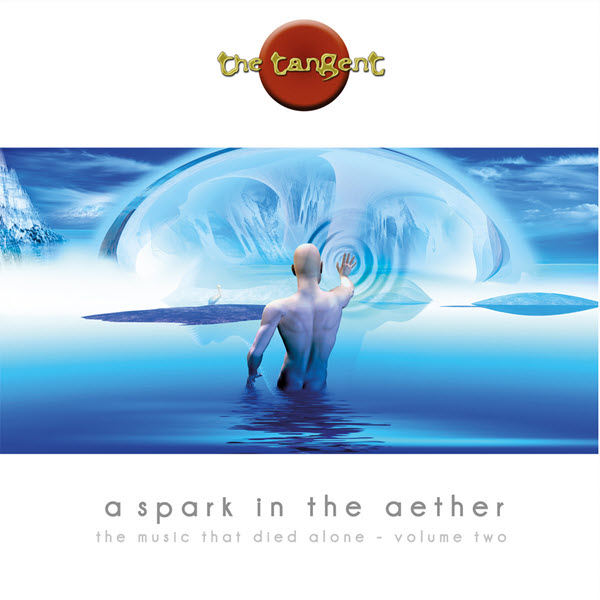
Despite skipping a few albums (I don’t own physical copies of Down and Out in Paris and London, COMM, or Le Sacre du Travail) it appears as though I’m back where I started with The Tangent. Because A Spark in the Aether, their 8th studio album, is subtitled The Music That Died Alone – Volume 2 and is purposefully position as a return to their prog roots after a few left hand turns. I can see that even if I’m not as familiar with the albums I missed – this is a prog rock album invested in the notion of prog rock: its history, its present, and its future. As such it’s a bit of a mixed bag for me – there’s stuff I really enjoy and some stuff (particularly lyrically) that distances me, as we’ll discuss below. But overall despite not being in my top tier of Tangent records, there’s plenty of good to be had, so let dive in at what is just over the halfway point of our Tangent journey.
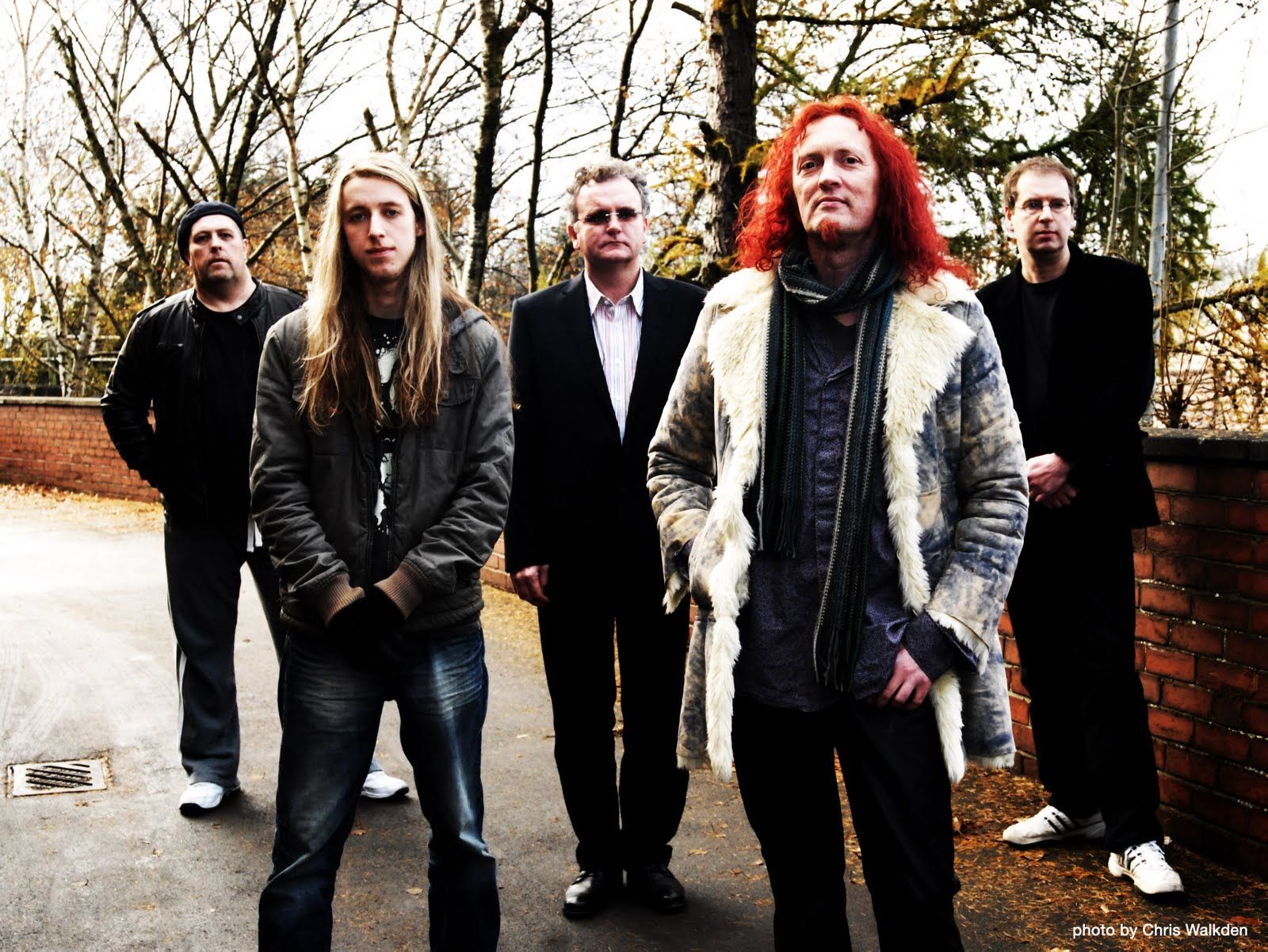
Who is this band that starts off with a track that’s only four and a half minutes long? “A Spark in the Aether” is really split into two sections that bookend the album, but this title track is a fun rocker, introducing the band perhaps to a wider audience with a more palatable but no less progtastic rocker. It also wouldn’t be a new Tangent album without some personnel changes – Luke Machin is now handling guitar duties, having joined the band back on COMM before leaving and coming back. Also joining up now is Morgan Ågren who along with Jonas Reingold made up the rhythm section for prog outfit Kaipa. Everyone sounds great – if anything this lineup feels more muscular, with plenty of hard hits and shredding solos. Lyrically the track speaks to playing the same old thing (defining prog the same old way?) and looking for something new, a “spark in the aether” if you will.
This pursuit carries over into the first epic length track, the hilariously titled “Codpieces and Capes.” Having dragged my wife to see Jethro Tull multiple times, I get special joy from the title (just assuming it’s a reference to Ian Anderson and Rick Wakeman). At over 12 minutes it get deep into the weeds both musically and lyrically, I love the passing reference to the self realization that sometimes you need to turn away from the old gatefolds (a reference to Tillison’s adoration of Tales From Topographic Oceans, IMO) and the comment about how if “Neal can find God, then what’s in it for me?” It only makes me wish there was an opportunity for Morse and Tillison to collaborate. I get my first real taste of Machin’s guitar and the man is killer with his soloing and licks. But Tillison, now solo with all keyboards makes the most of the track, working with Reingold and Ågren to craft some great pieces for Machin to solo over – there’s a heavy section around the seven minute mark that is super heavy and yet seamlessly blends back into the band’s natural, more funk driven mode.
Tillison may not actually quote Burt Bacharach like he did on The World That We Drive Through, but I can’t help but think of the prolific songwriter listening to “Clearing the Attic.” And that’s not a complaint – if anything I prefer it to the actual quote Tillison used on “The Winning Game.” The standout here is the organ break about three and half minutes in. When the band get on their laid back funky stride no one really does it better, and it provides another solid foundation for some wicked Machin soloing. This is probably (unless I missed something) my first exposure to Machin’s playing, and I am really taken with his style. From there we get the essentially instrumental “Aftereugene” which with its doom feel and ominous bass finally allows me to cheer for the genius that is Jonas Reingold. This is The Tangent in a very different, experimental mode and I’m 100% here for it. Also love Machin’s acoustic guitar going from a sort of flamenco into something altogether more mysterious and avant-garde. And Theo Travis absolutely beings the skronk. This could be a cut from Bill Pullman’s band in Lost Highway, to use an analogy that would have made more sense when taking about the next song. Anyway, love this track.
That brings us to the penultimate track, and the grandaddy epic, the 22-minute “The Celluloid Road.” A somewhat wistful look at America from the point of view of an Englishman who really only ever experiences it from his television set and the movies and TV shows that come out. And despite really digging the music here, this is where I start to get a little lyric fatigue. Tillison’s almost stream of consciousness storytelling is certainly clever and fun, but it doesn’t ever really hook you, if that makes sense. Which is weird considering how much of the music itself has hooks a-plenty. Beyond the references to Bruce Willis., Sandra Bullock, and others, you get what you’d expect from a 22-minute Tangent track: plenty of style switch-ups and incredible musicianship. You just also get some very, very silly lyrics.
That brings us back full circle, and we end with “A Spark in the Aether, Part 2,” this time with a lovely piano piece before Tillison switches to keyboards and Travis brings the sax and the rest of the band gradually comes up. It’s another great arrangement, playing as more of a proper suite than a song, and I love how gorgeous Reingold’s bass tone is here. Machin’s playing is subtle, and Morgan Ågren goes super tasteful with his jazz chops. Along with “Aftereugene” it’s my favorite track on the album, much more than a simple reprise (although we do get there in the end) and more than double the length of the first, more poppy track. For my money I get a little lost with about half this album, but the other half is so damn good I can understand why it’s a beloved entry in the band’s catalog, even if it doesn’t really match the power and vibrancy of the debut.
For me, anyway.




 Consuming the Tangible
Leave a comment