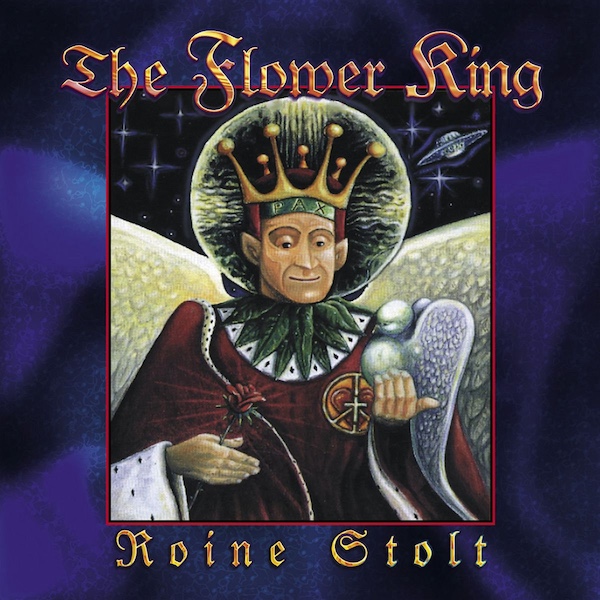
“We believe in the light, we believe in love, every precious, little thing.
We believe you can still surrender; you can serve the Flower King.”
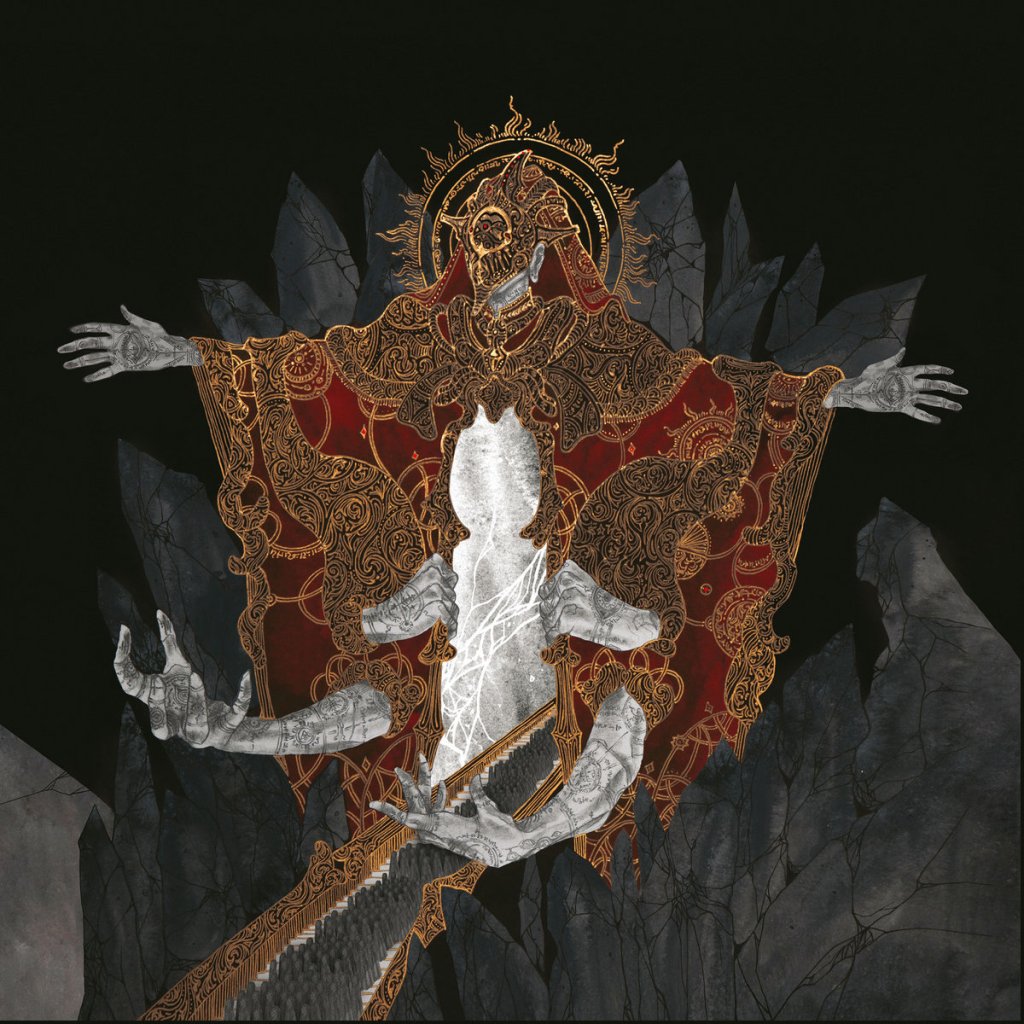
It’s there, in those two lines and the music that captures them that you can see the whole of The Flower Kings spring to life. But it’s not a Flower Kings album, it’s from the 1994 solo album from Roine Stolt titled The Flower King. There were certainly albums before this one: coming to prominence as a 17-year old guitar phenom with the Swedish progressive unit Kaipa in the mid 70s; a quick pair of albums as Fantasia (or Roine Stolt’s Fantasia); even two solo albums before the future congeals in this fantastic slab of progressive rock. So before jumping into the band proper, I thought it only fitting – especially since I was able to grab one of the limited edition first vinyl pressing of the album (it was only CD and digital before this year) – that we talk about the ür Flower Kings if I may borrow liberally from Harold Bloom. Whether you consider it part of the discography or not it’s a killer album, so let’s dig in.
If I had to limit discussion to one song, it would be “The Flower King” which opens the eponymous album. Slightly hippy and drippy, vocal fun integrated right into the music, Roine singing the verses (he has a very unique voice, similar in vibe if not style or cadence to Andy Tillison of The Tangent) and bringing in Hasse Fröberg to belt out that tremendous chorus. Combined with Jaime Salazar on drums you already have the start of what the Flower Kings would become (though Fröberg is strangely absent from the band’s debut). Stolt plays most of the instruments here and throughout the album, and it’s a delight from beginning to end, super upbeat and joyous until that solo comes and brings the mood to a more contemplative place. Stolt sounds fantastic, very melodic in his phrasing but capable of some weird, almost Zappa-esque licks that bring a spritely color to his sound. He’s handling keyboards as well, and while they don’t reach the heights they will when he beings in a fuller band, his colors and solos on that instrument are very well done. Thoughout “The Flower King” and indeed The Flower King the production and tone is superb – again, if you only heard this one track you’ll probably know if you’d be into the band moving forward or not.
Luckily that’s NOT all we have. Next up is “Dissonata” which implies a lot of dissonance but in reality is a more aggressive rocker, filled with fractured vocals melodies and an almost carnival rhythm. Salazar who also joined Stolt on the first few Tangent albums is a marvel here; it’s telling that most of these multi-hyphenate threats don’t extend to the kit. Stolt will bring his brother Michael in for bass when the full band forms, but his bass playing here is great, it doesn’t feel like a guitarist playing bass, but someone who understands the instrument’s function within the larger structure. The middle section opens with a new melody and theme, and allows the track to soften, stretch and bend to new avenues.
But this is very clearly a song, an important distinction because with a small detour in the ambient, gentle “Close Your Eyes” – the shortest track by a country mile at just over three minutes – the next three tracks are instrumentals. If I have a favorite it’s the funky and very Zappa-inspired in moments “The Magic Garden of Zeb.” Maybe it’s the jaunty melody Stolt opens with (he’s a sucker for a thick, syrupy melody) and the vibraphone that peppers the track, but it’s also the copious soloing, not all of which is inspired by the great Mustached One; I can hear some serious Vai influences there as well. Vinyl constraints mean we get “Scanning the Greenhouse” to end Side B instead of ending The Flower King proper. It’s really a coda to “The Flower King” with Fröberg returning to belt out that magnificent chorus – I think Stolt knew he had a masterpiece in that melody and just had to bring it back. As a segue between discs it works fine.
Which leaves the other two instrumentals to take up Side C. “The Pilgrim’s Inn” gives us our first taste of Ulf Wallander, who will continue to pop up throughout the Flower Kings’s lengthy discography. Classical guitar and harpsichord sounds find their way into the spacious framework, and one of the things I wonder is how a song like this would sound if it wasn’t basically one person constructing it all, how would this have come out through a full band jamming? I don’t hear anything in the track that leans one way or the other, but it’s what popped in my mind when I listened. “The Sound of Violence” perhaps by nature of its shorter length is a more rocking affair, muscular workouts on guitar, plenty of fuzz and lightning leads both on guitar and keyboards.
That just leaves “Humanizzimo” to close out The Flower King in style. A six-part, 21-minute epic that shifted into a pastoral gear before Stolt’s voice comes in to lament the passing of lovers in the twilight. Wallander is back providing a lot of relief with his woodwinds, and the track takes a while to coil itself up before springing into a gin-joint boogie which was really unexpected the first time I heard it. We also hear more about The Flower King himself, coming for the narrator if he doesn’t shape his life up. There’s definitely a Christian theme underlying everything here, and Iistening now with the lyrics in front of me I’m suddenly wondering if the rest of the band’s discography has similar under (or over) tones. No wonder the synergy between him and Neal Morse made so much sense for Transatlantic. By the end Stolt reminds us that it’s love that we need, love that will save the day, so be sure to hold on to your flower of love.
Now that’s a theme I know will hold through the band’s discography…a discography we’ll begin in earnest with the next review.
“We believe in the heart, we believe in healing, in the house where angels sing. We unite the divided and the fallen one will serve the Flower King.”


 Consuming the Tangible
Leave a comment