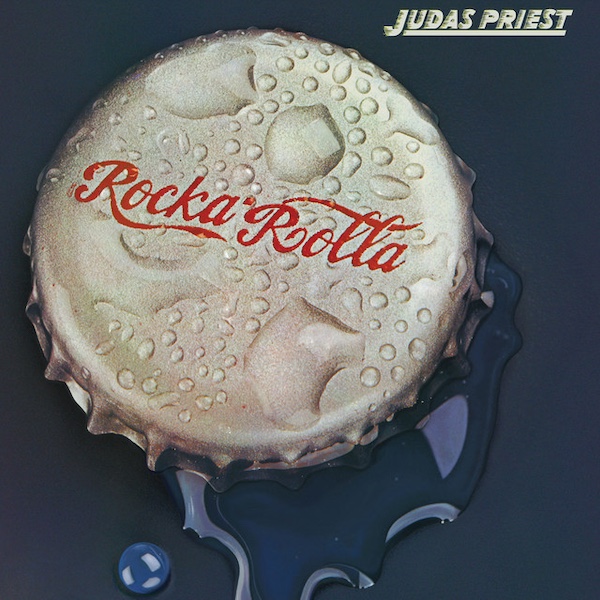
“Where would you be, without music?” It starts with Tipton’s guitar, panned hard right laying out the basic riff. On the next measure John Hinch’s kick comes in, reinforcing the beat. Downing’s so eager to get into it you can hear his amp kick in, the hum warming up before the pick slides and one of the most famous dual guitar lineups in heavy metal history join together. But Rocka Rolla, the debut by the immortal, the forever Judas Priest really starts with that lyric, maybe the greatest opening lyric in modern rock history. And while the opening salvo from the Metal Gods largely gets overshadowed by literal decades of incredible albums, including a sophomore powerhouse that would solidify their stature, it’s important to remember, 50 years on, where it all started.
I first came to the songs on Rocka Rolla from the Hero, Hero compilation by Gull Records, Priest’s original label. The songs there were remixed from the original 1974 “Bottle Cap” version, and now again listening to the brand new 2024 remix/remaster I’m hearing them again like they were brand new. So even my opening intro may be in doubt – the internet tells me that Titpon was right channel and Downing was left, but how opener “One For The Road” kicks off changes depending on the mix. So rather than get mired in the production (I’ll say the 2024 remix/remaster is loud, aggressive, and brings out nuances with Halford’s harmonica and song endings the original didn’t, and I’m still finding my footing) I’ll focus on the one thing that has remained consistent with the album over 50 years: it’s terrific, front to back. Let’s do it, song by song.
The band hits the ground running with “One For The Road”, a mid-tempo stomper that is seemingly at odds with itself: it’s a song about rocking out and playing out loud for the crowd, but it’s far from any party rock and roll anthem. It’s mean, gritty, and propelled by Hinch’s drumming. Halford isn’t hitting his signature highs…yet, but the way he holds his notes at the end of the verses is sublime, the hint of the power to come. Do you get the hint of Led Zeppelin at the track’s end, too? Or is it just me?
“Rocka Rolla” is forever paired in my head with the image that adorned the album’s reissue, featuring incredible artwork by Melvyn Grant. As a kid I never understood the lyrics (it’s basically about barroom woman, although Halford plays with the wording just enough to make it tongue-in-cheek campy) but the chorus always reminded me that the “Rocka Rolla” was some insane mechanical fighting machine. As for the music? The main riff has some funky synthesizer mixed in with the guitars (stop your whining, Turbo haters…it was here the whole time) and then moves into a great gallop for the chorus. This is one where the remix sounds fantastic – the dual guitar leads are in place, the solos are sweet, and Halford’s harmonica brings the funk hard. You also get his patented wail on the line “Two-faced liar” where he doubles himself in octaves. Brilliant.
More synthesizer opens “Winter”, the guitars and vocals heavily processed to give a foreboding, ominous presence as everything spirals into a Sabbath doom stomp that is supremely heavy. The band would really come into their own on follow-up Sad Wings Of Destiny; here they’re still finding their identity, but I will never be mad as how good a Sabbath imitation they pull off here. “Deep Freeze” is basically KK Downing going insane for two minutes. I am not mad at this. I can see why some of the reissues had this, “Winter”, and the next two tracks tied together in a rough suite, though I think it would have made better sense to tie the three together and leave “Cheater” as a standalone. Still, this is some freaky instrumental shit, progressive for its time. If we keep going with the idea of a song suite, “Winter Retreat” is the culmination, a sweet return to earth after the cosmic freakout of Downing’s instrumental. Halford sounds so good singing this style of song, I wish they had done a little more of this on their earlier albums. Over too quickly for my taste at a minute and a half.
Side 1 ends with some hard rockin’ blues, harmonica and all. Halford screaming about his no-good woman doing him wrong on “Cheater” and even though the guitar line is reminiscent of “One For The Road” I really dig the harmonica on this. It’s a far cry from what Judas Priest would transform into, but again, for an album where the band are still looking for their sound, it’s incredible to hear how adept they were at nailing the popular forms of the day.
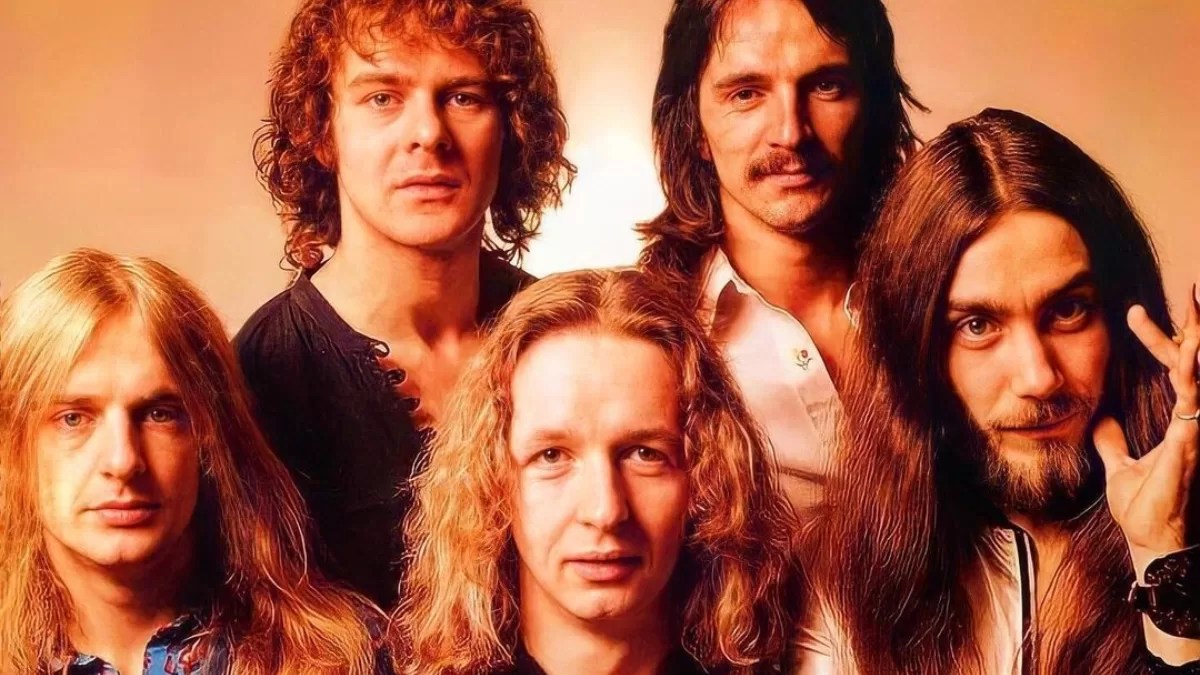
Side 2 opens with another barn burner, “Never Satisfied” being a prototype for later rockers. I know the band let John Hinch go after this album, stating he wasn’t up to snuff musically for where they wanted to go next, but he sounds great here, the remaster putting more power in his drums and his work fitting the more simplistic rockers the band were laying out. Simple it may be, but no one could scream like the way Rob does at the song’s end.
Does “Run Of The Mill” hint as to where Priest wanted to go? It’s the longest single track at over eight minutes, and has a fantastic acoustic opening. It’s a downer lyrically, lamenting age and lost opportunities, playing it safe when they could have strove for something better. The music works with that anger and regret, rising in tension and anger before dropping again with some pretty cool guitar licks. Stylistically we know this is a far cry from where the band would go, but thematically? Dramatically? it’s all there in “Run Of The Mill” to my ears. It’s also very 70s, and very indebted to Led Zeppelin and Deep Purple. Which, you know…is right up my alley. As is “Dying To Meet You” which beneath its elegiac lament barely hides a red hot seething anger for the militaristic war machine. Such an incredible song – when it kicks into high gear and Halford starts screaming “Killer! KILLER!” and the guitars get that funky stank on it’s such a great left hand turn I’m always left gobsmacked that we’re still in the same song.
Rocka Rolla finally ends with the pretty instrumental “Caviar and Meth” and in lieu of words, I’m brought back to the beginning of the album.
Where would we be, without music? Rob answers it in very next line.
“We would be nowhere at all.”

 Consuming the Tangible
Leave a comment