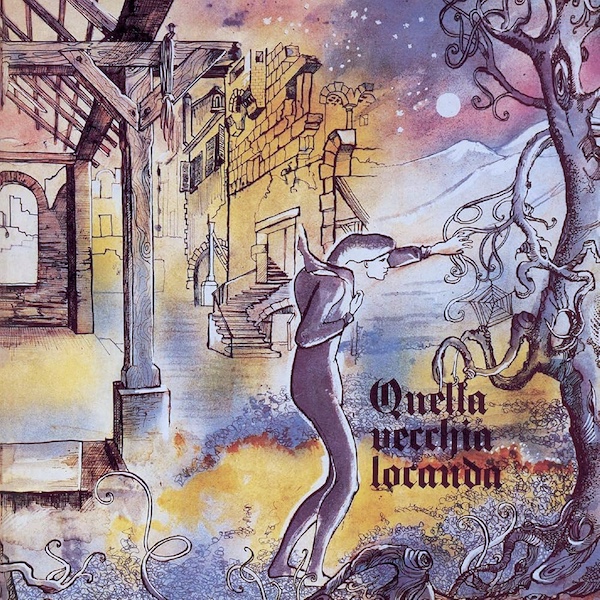
When in Rome…you get an afternoon to yourself, put your headphones on, and roam the streets looking for records stores. It wasn’t long before I found myself in front of Discoteca Laziale, a gorgeous marbled floor sanctuary for all manner of CDs and vinyl. My goal was some Italian progressive rock (again, when in Rome…) and was not surprised that Rome, like everywhere else, treats progressive rock like an unwanted step-child, relegating the vinyl to two unmarked boxes in the back and a small corner for CDs. Still, I grabbed the eponymous debut from Quella Vecchio Locanda (translated as “That Old Inn”) for just €9, and its blend of Jethro Tull-inspired folk rock with a heady dose of classical elements and symphonic arrangements made for a great travel companion throughout the first part of my trip to Italy.
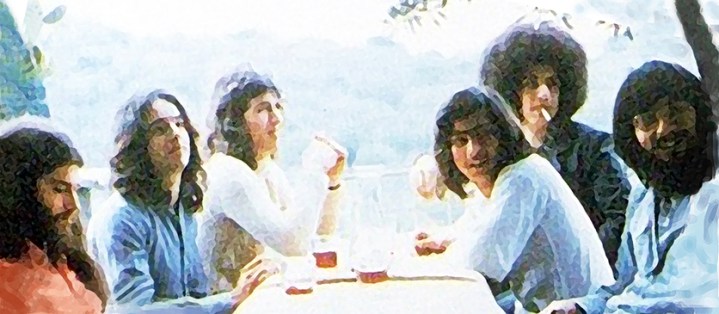
Formed in Rome in 1970, the group only released two albums, and boasted an American, Don Lax, on violin. Lax’s violin, along with the very Ian Anderson sounding flute (his distinct breathy soloing is all over tracks like “Prologo” and “Immagini Sfocate”) from lead vocalist Giorgio Giorgi are what really give Quella Vecchio Locanda its particular vibe. And that vibe is very much early Jethro Tull, albeit with more classical cues sandwiched into the folk rock jams. A song like “Un Villaggio, Un’Illusione” may start with a baroque cue courtesy of Lax’s violin, but once that guitar comes in the sound of 70s rock is front and center. Guitarist Raimondo Maria Cocco isn’t the most dynamic player, but his gives the songs some needed crunch, whereas bassist Romualdo Coletta is much more prominent, his tone up front and swinging.
Vocally Giorgi has a clear, full voice, and the way it blends with Cocco’s classical guitar and Massimo Roselli’s keyboard work on “Realtà” is lovely – the chorus shimmers with Roselli’s Mellotron. But where I really dig on Quella Vecchio Locanda are on the more tracking numbers. Taken as a pair, “Immagini Sfocate” and “Il Cieco” are the killer highlight of the album, featuring Roselli going apeshit with a variety of instruments including Moog and a zither of all things, and the gradual acceleration of the tempo until the song kicks in brings some real excitement to the song. We also get Cocco letting loose with a guitar solo, and finally drummer Patrick Traina gets to cut loose a bit, something I wish the album would do more of.
“Dialogo” continues that bluesy, swinging attack with Roselli coming more and more into the mix with his synthesizers and electronics. It’s a great little instrumental rocker, cleansing the palate before the final, longest tracks on the album. “Verso la Locanda” brings the classical cues folded into a patchwork of riffs and styles that hews closest to what I imagine folks think of when they hear the phrase “progressive rock”. Finally, “Sogno, Risveglio E…” brings Quella Vecchio Locanda full force into the classical part of their sound, being a lilting, beautiful piano showcase for Roselli. Listening to it I can feel the bond to the artwork adorning the cover, painted by Giancarlo Impiglia (Italian progressive rock has some of the best album art, fight me).
The lineup and attack would alter for their second and final album a year or so later, but for a debut so heavily indebted to what was happening in the UK prog scene, Quella Vecchio Locanda, both thew band and the album, is an essential document of what made the Italian scene so special.

 Consuming the Tangible
Leave a comment