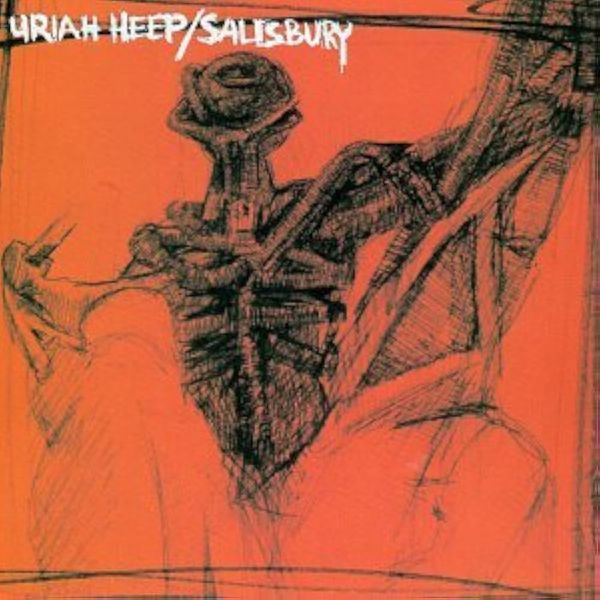
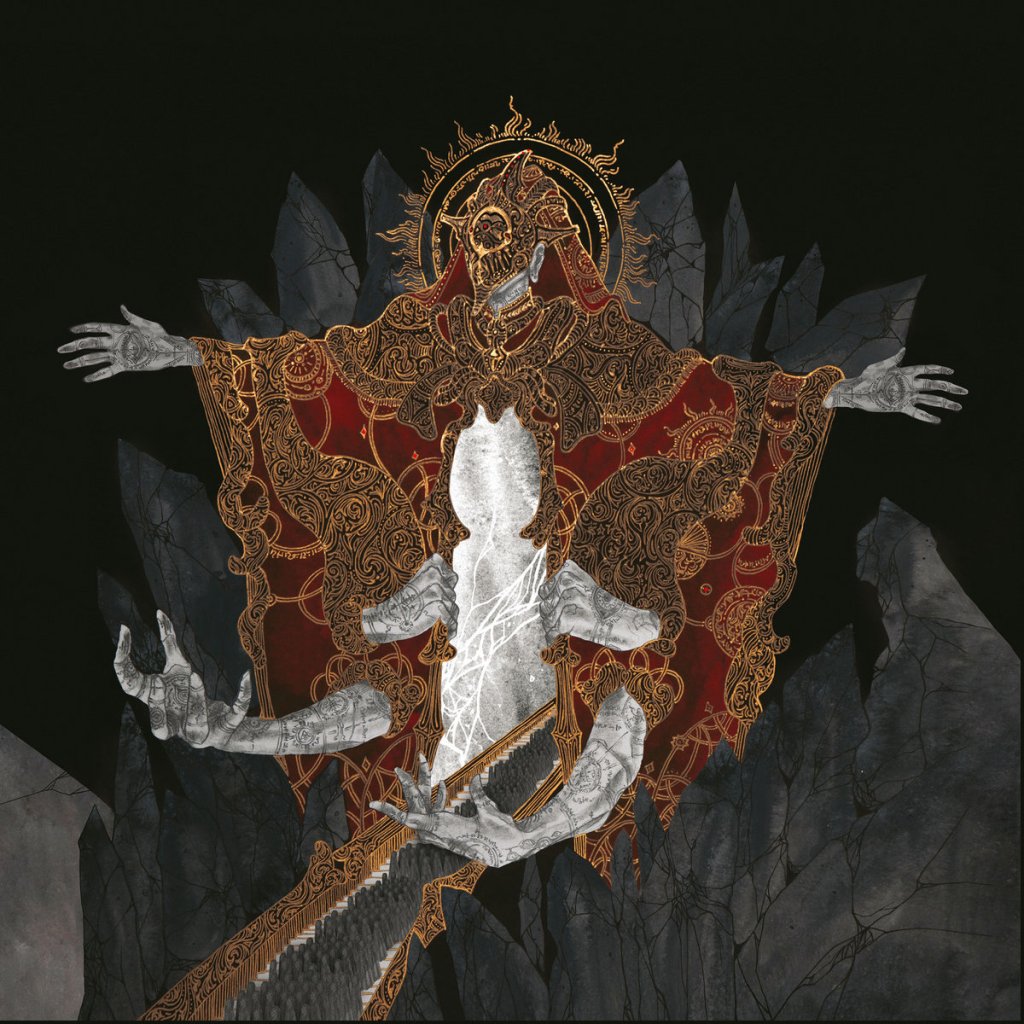
Despite my love and recent purchases of the later, most current iteration of Uriah Heep – Living the Dream and Into the Wild are killer modern rock records – there’s nothing like that classic, early 70s incarnation. Like their debut, sophomore record Salisbury has a different track order depending on if you have the UK or the US version, and while the original UK would have been a better selection (you can’t beat opening with “Bird of Prey”), you can’t throw a rock in a record store here without hitting at least three copies of the US pressing for under $8. On the upside, wicked cover art, though.
We’re still missing two pieces of the classic line-up: Lee Kerslake and Gary Thain don’t enter the picture until Demons & Wizards. But the original lineup continues to be effective: guitarist Mick Box and vocalist David Byron are firmly in place, and keyboardist Ken Hensley ups his prominence here as one of the key songwriters, contributing on every song and fully composing half of them. As “Bird of Prey” was already slotted into the US version of the debut album, the US version Salisbury opens with “High Priestess”, a Hensley composition that gets its rollicking blues on with slide guitar and some nice twin lead harmonies between Box and Hensley, not to mention Byron stacking his vocals. It’s a fine tune, a nice opener, but just doesn’t compare to the UK blowing the doors off with “Bird of Prey”
“The Park” utilizes Byron’s high register for a bit of baroque chamber pop, and its a great highlight for his vocals, but coming as the second track from a heavy rock band out to prove itself, its feels misplaced in the sequencing. “Time to Live” thunders into place with guitars, bass, drums and keyboards stabbing the cadence before Box’s sweet solo, and I could make the case for this opening Salisbury, with “High Priestess” and “The Park” taking the second and third positions and making for a stronger track list. There’s a definitely Deep Purple vibe with Hensley’s organ up front, and it’s a cool lumbering rocker. “Lady in Black” strums along with a strong vocal melody, and Hensley’s orchestrations behind the tune give a nice layer to all the vocals meshing together in the chorus. The end drops the arrangements into the background to let the vocal chants come to the fore, and it’s a nice touch.
That leaves the “new” number for the US pressing to being the journey home, and “Simon the Bullet Freak” despite the weird cool name doesn’t leave the biggest impression. It sounds half-finished; a lazy, slow boogie blues that has a little more “oomph” on the alternate version found on the deluxe edition of Salisbury; sadly, the US version feels small in comparison.
But that’s all prelude to the reason I think Salisbury gets the props it does: the 16-minute epic title track, worthy of all the accolades thrown upon it. Opening with a 24-piece orchestra, this is where Ken Hensley finds his place in the band, his organ blazing in between the horns laying down a fierce cinematic theme before Keith Baker’s drums enter. It’s three minutes before the rest of the band comes in, and after a few verses we get to a series of solos that sounds like what if Moody Blues mainlined Led Zeppelin and cranked the distortion. Everyone gets a chance to shine, with bassist Paul Newton bringing the jazz in with some stellar walking bass lines and Hensley going nuts. Box has three fantastic guitar solos, and “Salisbury” feels like one of the best prog tracks of the 70s regardless of whether you consider Uriah Heep a progressive rock band.
Just a top notch way to end an album, no matter the pressing.



 Consuming the Tangible
Leave a comment